Booking a Charter Without Surprises
A charter is the cheapest way to sail a yacht you may never own, provided you read the contract as carefully as the brochure. This guide covers costs, licences and cruising grounds.
Bareboat, skippered or fully crewed
A bareboat charter hands you the keys and the responsibility. Most bases in the Mediterranean require the skipper to hold a recognised qualification such as the International Certificate of Competence (ICC) or an RYA Day Skipper certificate, and many ask for a sailing CV and a VHF radio licence. A skippered charter adds a professional skipper, usually paid separately per day plus food. A crewed charter, typical for larger yachts and superyachts, includes captain, chef and deckhands and is commonly contracted on MYBA terms.
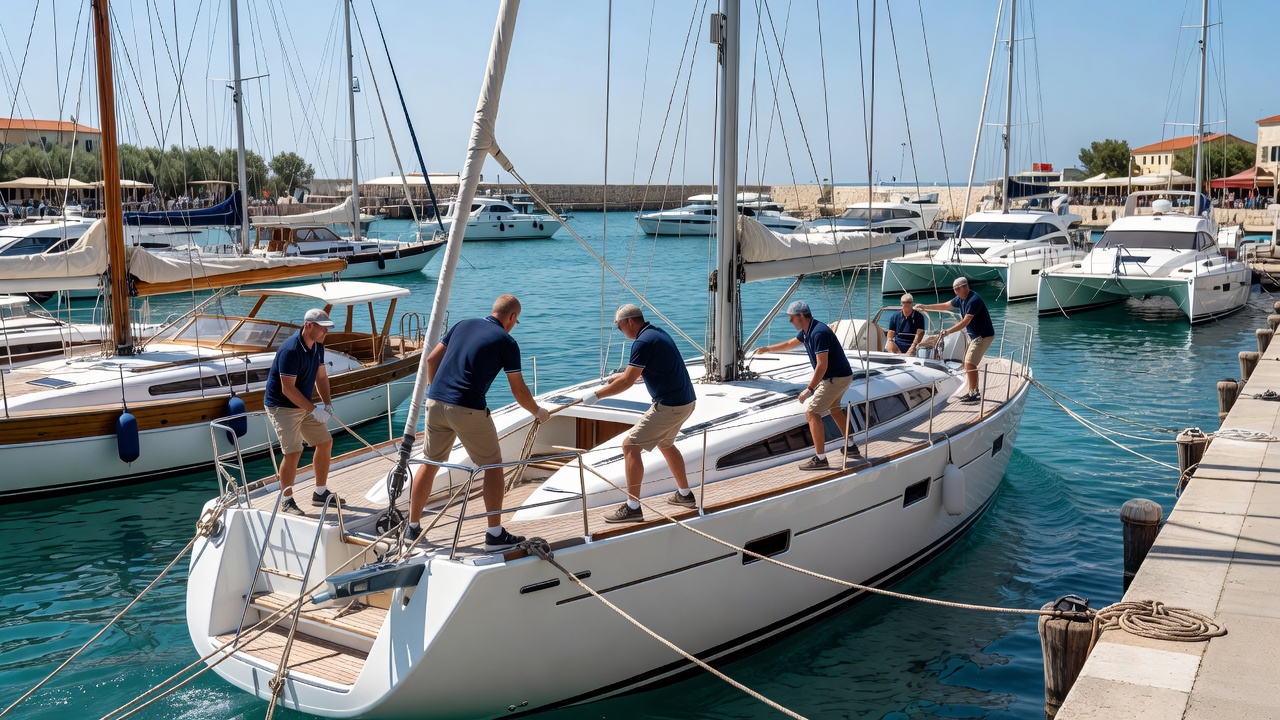
Be honest about experience. Stern-to mooring in a crowded Croatian town quay in a gusty bora is harder than any exam, and a skipper for the first two days can turn a stressful week into a good one.
Reading the true cost
Base charter fee
The weekly rate for the yacht and, on crewed charters, the crew's wages. It rarely includes running costs.
APA (Advance Provisioning Allowance)
On crewed charters under MYBA-style terms, a deposit commonly set around 25–35% of the base fee. The captain uses it for fuel, food, drinks, berthing and communications, and the balance is accounted for and returned at the end.
VAT
Charged according to where the charter starts and sails. Rates differ between Mediterranean countries and can change; check the current figure for your itinerary.
Crew gratuity
Customary rather than contractual; often quoted at 10–20% of the base fee on crewed yachts.
Bareboat extras
Security deposit or damage waiver, end cleaning, outboard, extra sails, transit log and local tourist taxes.
| Line | Bareboat | Crewed (MYBA-style) |
|---|---|---|
| Fuel | Paid by you on return | From APA |
| Food & drink | Bought by you | From APA |
| Berthing | Paid locally | From APA |
| Deposit | Security deposit / waiver | Usually not applicable |
| Gratuity | Not applicable | Customary 10–20% |
Percentages are typical market practice, not fixed rules. Your contract governs.
Where and when
Croatia, Dalmatian coast
Short hops between islands such as Hvar, Vis and the Kornati. May, June and September avoid the busiest weeks. Watch for the bora and the jugo.
- Season May–Oct
Greece, Cyclades and Ionian
The Cyclades bring the meltemi, a strong summer northerly peaking in July and August; the Ionian is gentler and suits first bareboat trips.
- Season May–Oct
Balearics
Mallorca, Menorca and Ibiza offer good marinas but strict anchoring rules to protect posidonia seagrass.
- Season May–Oct
British Virgin Islands
Steady trade winds and short line-of-sight passages from Tortola. The hurricane season, officially June to November, shapes insurance and availability.
- Season Dec–May
Before you sign
- Ask for the exact yacht name and year, not "or similar".
- Read the cancellation schedule and the weather clause.
- Confirm what insurance covers and the deposit or waiver amount.
- Check that your qualification is accepted in that country.
- Plan a first-day itinerary short enough to learn the boat.
The best charters we hear about share one trait: guests who asked these questions early. See our crew questions for more.