The Yards and the Pens Behind Them
A yacht carries two signatures: the naval architect who drew the lines and the yard that turned them into laminate, steel and joinery. Knowing both explains most of what you feel at the helm.
Why the builder and designer matter separately
Production builders often commission lines from an independent studio and then engineer the interior, deck hardware and systems in-house. That is why two boats from the same designer can feel quite different: the hull shape may share a family resemblance, but the build weight, rig choice and finish come from the yard. When we review, we try to attribute strengths and weaknesses to the right party.
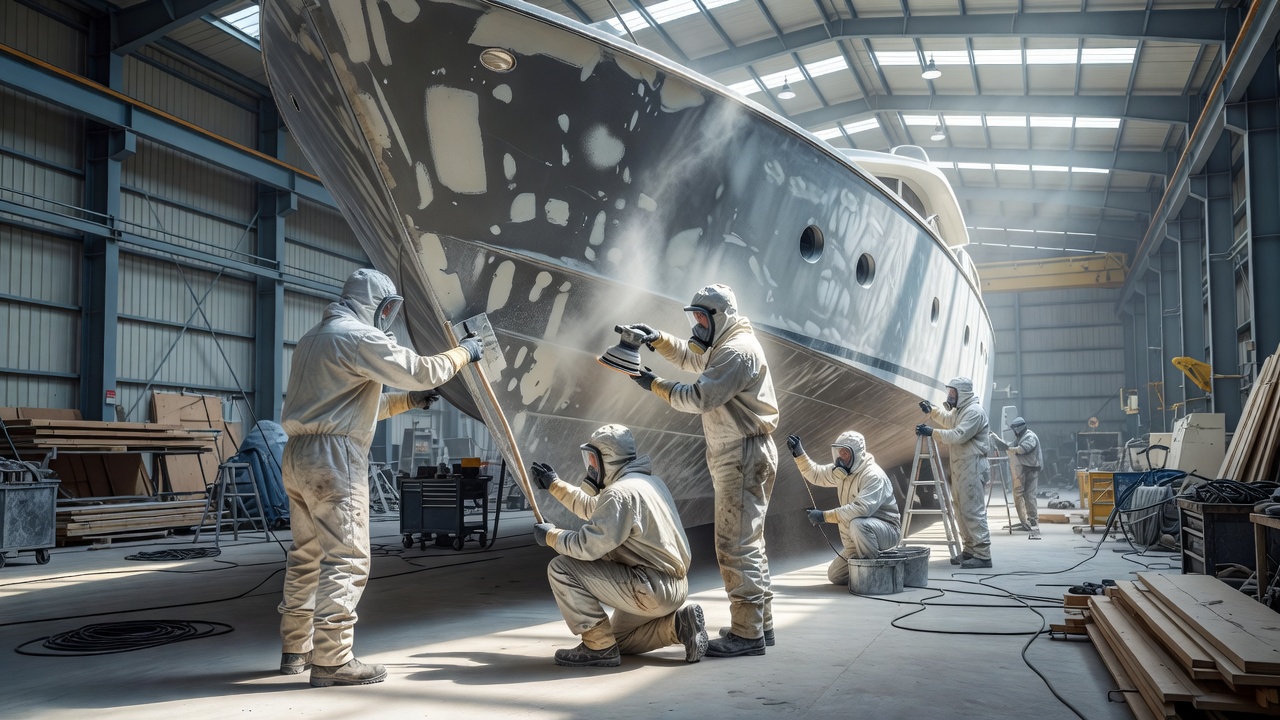
Shipyards
Feadship
A Dutch collaboration of family yards building fully custom superyachts at facilities including Aalsmeer, Kaag and Makkum. Known for long build programmes, in-house design through De Voogt Naval Architects, and exceptional paint and engineering standards.
- Netherlands
- Custom motor
Lürssen
Family-owned yard from the Bremen area responsible for many of the largest yachts in the world. Its scale in steel and aluminium construction is matched by few builders.
- Germany
- Giga-yachts
Benetti
Viareggio-based builder with roots in the nineteenth century, producing semi-custom and custom motor yachts. Part of the Azimut Benetti group.
- Italy
- Motor yachts
Nautor Swan
Founded in 1966 in Pietarsaari (Jakobstad), Finland. Its sailing yachts are associated with Germán Frers designs and a dedicated owners' regatta circuit including the Rolex Swan Cup in Porto Cervo.
- Finland
- Sailing yachts
Hallberg-Rassy
Builder on the island of Orust on Sweden's west coast, at Ellös. Recognisable by the blue hull stripe and fixed windscreen on many models, and a reputation for conservative, durable cruising boats.
- Sweden
- Cruisers
Naval architects
Germán Frers
Argentine designer whose studio has drawn generations of Swans and recent Hallberg-Rassys. His boats tend toward balanced helms and moderate, sea-kindly sections.
Judel/Vrolijk & Co
German studio with a long record in racing yachts and America's Cup programmes, also designing performance cruisers for production builders including Hanse.
Espen Øino
Norwegian-born designer working from Monaco. Espen Øino International is behind numerous large motor yachts and explorer-style vessels.
VPLP Design
French studio founded by Marc Van Peteghem and Vincent Lauriot-Prévost, known for ocean-racing multihulls and for the Lagoon catamaran range.
Rob Humphreys
British designer with a background in offshore racing whose work spans Oyster cruisers and ocean racers.
What to look for in a designer's work
Three questions help when comparing designs. First, where is the maximum beam carried? Wide sterns give volume and form stability but can make a boat skittish when heeled. Second, how much of the righting moment comes from ballast rather than hull shape? Ballast-heavy boats feel steadier as the breeze builds. Third, what rig is drawn: a fractional rig with a small jib is easier for couples; a masthead rig with an overlapping genoa offers more power in light air.
A yard visit tells you the rest. Look at how bulkheads are bonded to the hull, how wiring is labelled and supported, and whether seacocks can be reached without dismantling furniture. Builders who welcome that inspection usually have nothing to hide.
| Name | Role | Base | Best known for |
|---|---|---|---|
| Feadship | Yard | Netherlands | Custom superyachts |
| Nautor Swan | Yard | Finland | Performance cruisers |
| Germán Frers | Designer | Argentina / Italy | Swan lines |
| VPLP | Designer | France | Multihulls |